The Instrument Turns on Itself
Previously we established that consciousness collapses into thought, mistakes a mental event for a truth about the self, and suffering begins. We have reviewed how desire and aversion feed this collapse, keeping the mechanism alive through perpetual reaching and resisting. The diagnosis is complete. The machinery has been laid bare.
Now the mind does what the mind always does. It looks for a solution.
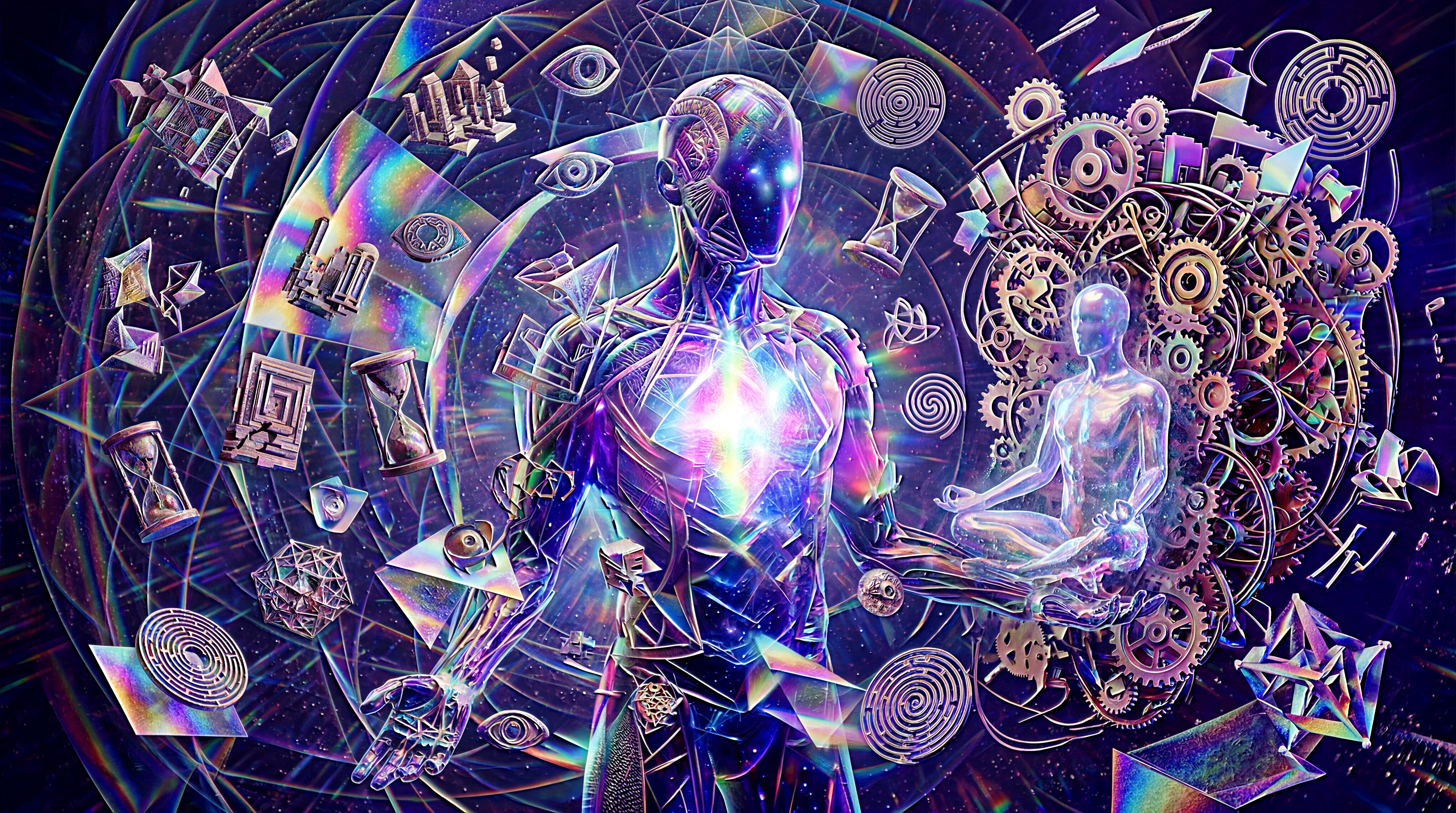
And here is where the entire project of self-improvement, self-help, and even most spiritual practice runs aground on a reef it cannot see. Because the instrument that created the problem is the same instrument now attempting to solve it. The thinker that generated the suffering is the same thinker now strategizing its way toward freedom. The fire is trying to extinguish itself by burning harder.
Jiddu Krishnamurti spent sixty years pointing to this single recognition. “The observer is the observed,” he said, again and again, to audiences who nodded and then went home to meditate their way toward enlightenment. The one who is trying to fix the problem is the problem. Not because you are broken. Because the “you” that is trying to fix things is itself a thought, and thoughts cannot transcend thought through more thinking.
The Tao Te Ching opens with this recognition. “The Tao that can be spoken is not the eternal Tao. The name that can be named is not the eternal name.” The moment you conceptualize the solution, you have moved further from it. The moment you create a mental model of freedom, you have imprisoned yourself in the model.
Ramana Maharshi approached it from the opposite direction, arriving at the same place. When seekers came to him with elaborate spiritual strategies, he asked one question. “Who is the one who wants to be free?” The question was not rhetorical. It cut through every strategy by exposing the strategist as the very obstruction being strategized against.